Τι είναι η Ε.Υ.ΘΥ.Τ.Α.


Η ΕΥΘΥΤΑ ΡΟΔΟΥ- ΠΑΡΑΤΗΡΗΤΗΡΙΟ ΟΔΙΚΗΣ ΑΣΦΑΛΕΙΑΣ

Εταιρεία Υποστήριξης Θυμάτων Τροχαίων Ατυχημάτων είναι ένας Μη Κερδοσκοπικός, Μη Κυβερνητικός Οργανισμός, στο χώρο της Οδικής Ασφάλειας.
Στη Ρόδο λειτουργεί από τον Ιούνιο 2004 , πρωτοβουλία της Προέδρου Καρύδη Ελένης, θύμα τροχαίου ατυχήματος, μετά από τον χαμό του γιου της Δημήτρη 19 χρόνων στις 12 Φεβρουαρίου 2002, πλαισιωμένη από επιστήμονες, θύματα, συγγενείς τροχαίων δυστυχημάτων και ευαισθητοποιημένα άτομα στο θέμα της Οδικής Ασφάλειας.
Είναι μέλος:

-Της Ευρωπαϊκής Ομοσπονδίας Θυμάτων Τροχαίων Ατυχημάτων-FEVR (Σύμβουλος του Ο.Η.Ε και του Π.Ο.Υ)
-Υποστηρικτής της Παγκόσμιας Οργάνωσης « MAKE ROADS SAFE »
-Το 2008 υπέγραψε την Ευρωπαϊκή Χάρτα Οδικής Ασφάλειας, για λιγότερα θύματα με την υποστήριξη της Ε.Ε.
-Αρωγό μέλος του Ε.Δ.Ι.ΠΑ.Β (Εθνικό Δίκτυο Πρόληψης Ατυχημάτων , συμπεριλαμβανομένων των τροχαίων)
-Μέλος της Διακομματικής Επιτροπής Δήμου Ρόδου
-Ιδρυτικό μέλος του Πανελλαδικού Συλλόγου
"SOS ΤΡΟΧΑΙΑ ΕΓΚΛΗΜΑΤΑ"
-Υποστηρίζει την Δεκαετία Δράσης 2011-2020 για την Οδική Ασφάλεια
-Συνεργάζεται με φορείς του Δημόσιου του Ιδιωτικού τομέα, με Παγκόσμιους & Ευρωπαϊκούς Φορείς και Οργανισμούς.

Ποιοι είναι οι σκοποί :

+Η υποστήριξη των θυμάτων των Τροχαίων Ατυχημάτων από ομάδα συμβούλων ( νομικών, ιατρών, ειδικών εμπειρογνωμόνων, συγκοινωνιολόγων, μηχανολόγων, εκπαιδευτικών, ψυχολόγων, κοινωνικών λειτουργών ).

+Η ανάπτυξη αλληλεγγύης μεταξύ των θυμάτων των Τροχαίων Ατυχημάτων( ηθική υποστήριξη ).

+Η οργανωμένη παρέμβαση και η κοινωνική πίεση προς τους φορείς της πολιτείας, για τη βελτίωση της οδικής ασφάλειας και την μείωση των τροχαίων ατυχημάτων.

+Η υποστήριξη η ανάληψη και προώθηση δραστηριοτήτων σε θέματα τα οποία προάγουν την οδική ασφάλεια, την κυκλοφοριακή αγωγή, την έρευνα, την ενημέρωση , την ευαισθητοποίηση των πολιτών των ιδιαίτερα ευάλωτων ηλικιών (μαθητών, ηλικιωμένων).

Ποιο είναι το Δυναμικό της:

Η ΕΥΘΥΤΑ ΡΟΔΟΥ, διαθέτει ένα τεχνοκρατικό πυρήνα από επιστήμονες- μέλη διαφόρων κλάδων ( Υγειονομικούς, Νομικούς, Εκπαιδευτικούς, Μηχανολόγους- Μηχανικούς, Πραγματογνώμονες, Συγκοινωνιολόγους, Οικονομολόγους, Αναλυτές Η/Υ, Ψυχολόγους, Κοινωνικούς Λειτουργούς).

Το δυναμικό της ΕΥΘΥΤΑ ΡΟΔΟΥ, ανταποκρίνεται απόλυτα στις υψηλές απαιτήσεις σοβαρών ερευνητικών προγραμμάτων, με θέμα την Οδική Ασφάλεια, την πρόσληψη και την μείωση των Τροχαίων Ατυχημάτων.

Διαθέτει επίσης ένα αξιόλογο επιτελείο έμπειρων επιστημόνων, που της επέτρεψε ως τώρα να πραγματοποιήσει πολλαπλές εκπαιδευτικές- ενημερωτικές δράσεις με στόχο τη βελτίωση της Οδικής Συμπεριφοράς.

Ποιες είναι οι Δραστηριότητές της:

Η ΕΥΘΥΤΑ ΡΟΔΟΥ, συμβάλλει δραστικά στην ενημέρωση των πολιτών για την Οδική Ασφάλεια, την πρόληψη και την μείωση των τροχαίων ατυχημάτων και παρέχει σε μόνιμη βάση Νομική, Ιατρική, Ψυχολογική και Κοινωνική Υποστήριξη σε θύματα και συγγενείς θυμάτων Τροχαίων Ατυχημάτων όταν αυτή ζητηθεί.

Η ΕΥΘΥΤΑ ΡΟΔΟΥ, έχει διοργανώσει εκδηλώσεις ( Ημερίδες, Έκθεση φωτογραφίας , Δράσεις σε ανοικτούς χώρους, Διδασκαλία σε Σχολεία Α/ας και Β/ας Εκπαίδευσης, Σεμινάρια σε κέντρα εκπαίδευσης νεοσυλλέκτων, Ενημερωτικές ομιλίες σε Δήμους της Ρόδου) στο πλαίσιο της ενημέρωσης των πολιτών σε θέματα που προάγουν την Οδική Ασφάλεια και έχει κάνει ουσιαστικές παρεμβάσεις στους φορείς σε θέματα Οδικής Ασφάλειας.

Έχει εκδώσει ενημερωτικά έντυπα με έγκυρη επιστημονική πληροφόρηση σε θέματα Οδικής Ασφάλειας.

Η ΕΥΘΥΤΑ ΡΟΔΟΥ, πιστεύει ότι για την επίτευξη αποτελεσμάτων χρειάζεται δραστηριοποίηση από τους πολίτες, υποστήριξη από τον κρατικό μηχανισμό και αλλαγή της αρνητικής νοοτροπίας στοιχεία που θα μας βοηθήσουν να απαλλαγούμε από την ιδιότητα της Ευρωπαϊκής χώρας με μεγάλο αριθμό Θυμάτων Τροχαίων δυστυχημάτων και με επικίνδυνους δρόμους για ασφαλή οδήγηση.

http://www.efhtita.gr


27 Νοε 2018

Vision Zero: latest road safety research and initiatives from Brake


Global initiatives

Policy: Global Alliance of NGOs for Road Safety
The Global Alliance of NGOs for Road
Safety
has launched its Africa Chapter to strengthen the NGO voice in Africa and empower NGOs to deliver road safety  targets agreed by UN member states.

Africa has 2% of the world’s cars but 16% of the world’s road deaths, and more than 300,000 people lose their lives in road traffic crashes in the region every year, while thousands more are injured.

NGOs play a major role in advocating for road safety policies across Africa. The Africa Chapter calls for governments in Africa to take the lead in road safety, through political ownership, long-term vision and strategic leadership. It also calls for increased funding for evidence-based road safety measures that put people first.

The news was announced at the 1st African Road Safety Forum in Marrakech, Morocco, where policy-makers, government representatives, NGOs and other stakeholders met to discuss solutions to the road safety crisis in Africa.

Sustainability

Research: Air quality
The World Health Organization (WHO) has called on stakeholders worldwide to step-up action against air pollution after revealing
that more than 90% of children breathe air that is so polluted it puts their health and development at risk.

Exposure to air pollution affects brain development and is linked to asthma, childhood cancers and cardiovascular disease later in life. Even low levels of air pollution damage children’s lung function.

The latest WHO report on air pollution and child health highlights that 93% of children under 15 live in areas where levels of ambient fine particulate matter exceed WHO air quality guidelines; this rises to 98% of children under five in low- and middle-income countries (compared with just 52% of under-fives in high-income countries). Vehicle emissions are one of the major sources of particulate matter pollution.

At the First WHO Global Conference on Air Pollution and Health, which took place in Geneva, Switzerland, earlier this month, participants agreed an aspirational goal to reduce the number of deaths from air pollution by two-thirds by 2030. Attendees called for urgent, decisive action to address the health crisis.

Research: Shared mobility

Shared mobility could bring substantial benefits to Dublin and its transport system, reducing traffic congestion and improving
air quality and accessibility, says a new report from the International Transport
Forum
(ITF).

The ITF examined the impact of sharing transport services on mobility in the Greater Dublin Area (GDA), Ireland, while promoting the integration of public transport and active travel. Researchers modelled 11 different transport scenarios, to show how shared transport could improve congestion, lower CO2 emissions and increase use of public space.

They found that mobility in the area could be delivered with only 2% of the current number of private vehicles, through a shared mobility transport system that included existing rail services. Vehicle distance driven, emissions and congestion could all be reduced by between 30 and 40% and implementing a shared mobility strategy at a wider regional scale would deliver even greater benefits.

The report also found that women and young people under the age of 25 were the most likely to use shared mobility services, citing lower costs and reduced waiting times as the main attractions.

Vehicles

Initiative: #SaferCarsForAfrica
Global NCAP and AA South Africa have issued an urgent call for African governments to ban the sale of zero-star cars to protect drivers from the risk of death and serious injury in a road crash.

The call follows the latest crash test results issued as part of Global NCAP’s #SaferCarsForAfrica campaign, in which Nissan’s NP300 ‘Hardbody’ received a zero-star safety rating. The vehicle’s structure collapsed during the crash test and the bodyshell was so unstable that the airbags were ineffective. High forces placed on the crash test dummy posed a significant risk of fatal injury in the event of a crash.

Nissan is marketing the NP300 Hardbody as the “king of African pickups”, with a “security shield” to protect its occupants.

Raising awareness


Event: World Day of Remembrance 2018
The World Day of Remembrance for Road Traffic Victims (WDoR2018) took place on
18 November this year, commemorating the lives of people killed and seriously
injured on the world’s roads.

This year’s theme was ‘Roads have stories’ and encouraged road crash victims and those bereaved by road crashes to share their experiences and raise awareness of the sudden and devastating effects of a road crash on victims, their loved ones and communities.

WDoR2018 also focused on pillar two of the Global Plan for the Decade of Action for Road Safety – Safer roads and mobility, by asking policy-makers to raise the safety and quality of road networks for the benefit of all road users, through infrastructure assessments and improved planning, design, construction and operation of roads.

Initiative: The Global Urban Mobility Challenge 2019

The Global Urban Mobility Challenge 2019 is open for submissions. Urban policy-makers with ideas for new initiatives to improve sustainable mobility can now apply for funding to transform their vision into reality. Project topics range from active mobility, to logistics, to e-mobility.

Launched by the Transformative Urban Mobility Initiative (TUMI), the global challenge focuses on encouraging bold and ambitious policies to improve the sustainability of urban transport systems in developing countries and emerging economies.

Get involved: The deadline for submission is 21 December 2018.

Upcoming global road safety events

4 December 2018
IRF & UNECE ITS Summit
Organisers: International Road Federation
Location: Geneva, Switzerland

4-5 December 2018
COP24: 24th Session of the Conference of the Parties to the UN Convention on Climate Change
Organisers: UNFCCC
Location: Katowice, Poland

Find out more: Visit our calendar of global road safety events.

PRESS RELEASE: Alliance Advocate Program Extends to Asia

Press Release: Alliance Advocates Asia

PRESS RELEASE: ALLIANCE ADVOCATE PROGRAM EXTENDS TO ASIA
27 November 2018, New Delhi, India
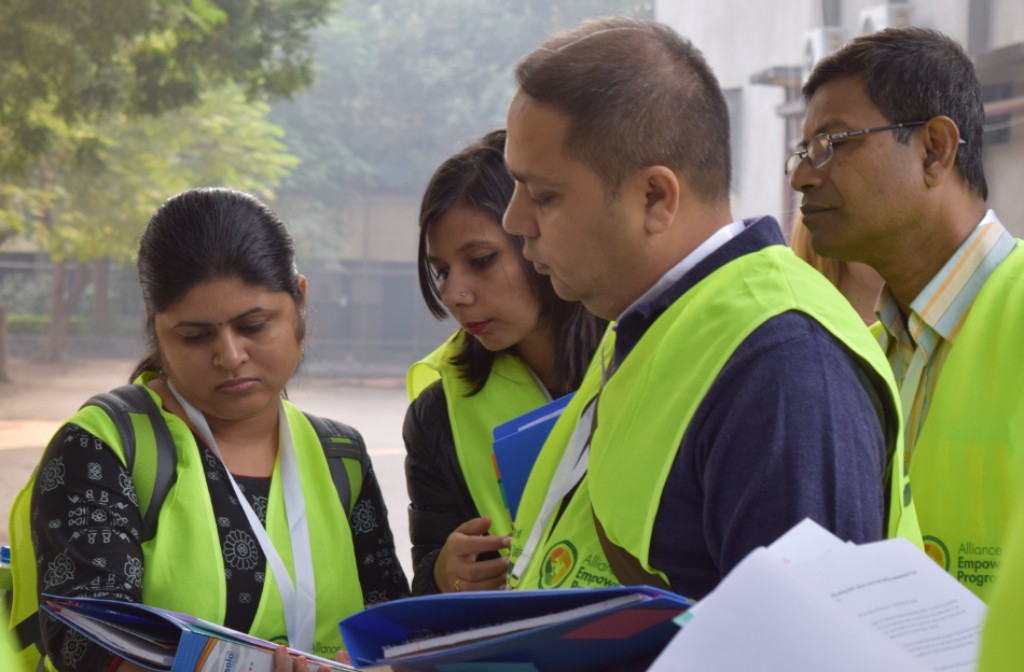
Yesterday 21 grassroots road safety NGO leaders from eight countries in Asia became the newest cohort of trainees to join the Alliance Advocates Program, a growing movement of NGOs that is championing a low-cost, evidence-based approach to road safety.

It is the first time that the Alliance Advocate training, organized by the Global Alliance of NGOs for Road Safety (the Alliance), has been run in Asia.

The trainees, known as Alliance Advocates, will strengthen their data, project management, and advocacy skills through a practical, innovative demonstration project. Today they collected road data around a school in suburban New Delhi — using the International Road Assessment Programme (iRAP)’s Star Rating for Schools methodology — which they will use to identify actions that would radically improve student safety, and create an advocacy plan. On Thursday, they will present their plan to decision makers, including representatives from India’s Ministry of Road Transportation and Highways (MoRTH), local traffic police, and the World Health Organization (WHO). This will give them firsthand experience of presenting their case to those responsible for safer roads.

At the end of the training, the Alliance Advocates will take what they have learned and replicate the project in their own communities. We anticipate that at least 21 schools will have been assessed across Asia by April 2019 and that the Alliance Advocates will work with schools and local governments to extend the project across their cities. This approach could transform school journeys for millions of children who risk their lives every day to attend school along dangerous roads.

Since the program’s inception in 2015, 49 Alliance Advocates have been trained; successes achieved as a result of the training include reactivation of seat belt legislation in Tunisia (leading to a 35% reduction in road deaths in the first month), multi-sectoral partnerships, and award-winning media campaigns. The safe school element of the training was introduced in March 2018, and so far 18 schools in 13 countries across Africa have been assessed, with infrastructure implemented at a school in Mozambique; decision makers in Nairobi, Kenya, committed to implementing recommended changes; and national governments in several countries are showing interest.

Ms. Lotte Brondum, Executive Director of the Alliance, said: “Children in some parts of Asia are risking their lives every day on the way to school and back. The Alliance Advocates will implement realistic and effective action plans so that children don’t have to risk their lives to get an education. We encourage their governments to allow them to share their new knowledge and to work together with them to make schools across Asia safer.”

TISPOL Bulletin 27 November 2018


Welcome to your latest
TISPOL Bulletin
 

Automotive supplier industry, cities and campaigners call on EU industry ministers to back new vehicle safety
standards without delay

TISPOL has joined a coalition of organisations to call on EU Ministers of Industry to give their full support to a proposed package of new vehicle safety measures at the EU Competitiveness Council meeting on Thursday 29 November.
The coalition is made up of automotive supplier companies, cities and groups campaigning for greater road safety, and includes ETSC, the European Cyclists Federation, FEVR and the Towards Zero Foundation. 
At the meeting in Brussels, industry ministers will outline their initial response, known as a “general approach”, to a package of 16 vehicle safety measures proposed by the European Commission in May.

The coalition, representing €600 billion of annual sales and 5 million jobs in the automotive industry across the EU, together with city authorities, traffic police, safety and sustainability advocates, cyclists, pedestrians and victims groups, says the European Union should adopt the measures without delay and guarantee the safety benefits of the full package without deprioritising certain measures or further delaying the implementation of the draft regulation.

Sigrid de Vries, Secretary General of CLEPA, representing automotive suppliers said:

“The General Safety Regulation represents the next big step for the safety of Europe’s drivers, cyclists, and pedestrians. CLEPA strongly supports all the elements of the proposed text.

Besides reducing the number of deaths and serious injuries on our roads, the introduction of new safety measures will decrease road congestion, CO₂ emissions, emergency service requirements and related economic costs.  New safety requirements will also push forward European research, development and innovation, contributing to generate growth, jobs and investment in the European Union.”

Antonio Avenoso, Executive Director of ETSC, the European Transport Safety Council said:

“With progress stagnating on reducing the 25,000 deaths and 135,000 serious injuries every year on EU roads, it is essential that these measures are adopted in full, and without delay.  This is a historic opportunity to reduce death and serious injury on our roads – especially amongst vulnerable road users such as cyclists and pedestrians.  It is also a fantastic example of EU leadership that has a clear and obvious value to every European citizen.  Industry ministers should welcome these measures with open arms.”

Following the agreement among industry ministers, the legislation is subject to committee and plenary votes in the European Parliament and final negotiations between the institutions in a process that is likely to last several months.
Supporting organisations are: ANEC – The European consumer voice in standardisation; European Association of Automotive Suppliers (CLEPA); European Transport Safety Council (ETSC); EUROCITIES; European Cyclists Federation (ECF); FEVR – European Federation of Road Traffic Victims; International Federation of Pedestrians (IFP); POLIS – Cities and Regions for Better Transport; TISPOL – the European Traffic Police Network; Towards Zero FoundationTransport and Environment (T&E)
 
Ireland: road safety chief calls for mobile devices to detect illegal drivers
The head of Ireland's Road Safety Authority (RSA) has called for police officers to be equipped with mobile devices to detect illegal drivers “in real time” at the roadside.
RSA chief executive Moya Murdock said disqualified and unqualified motorists were continuing to drive undetected. “People who engage in that type of behaviour are generally non-compliant in all other areas of road safety,” she said.
Officers needed to be provided with a mechanism where they could check at the road side whether a motorist held a valid licence, instead of waiting until they returned to the station or instead of asking someone to bring their to the station. “That’s not an effective or an intelligent way to police the roads,” she said.
Such mobile devices were available, but she said it was “a challenge to get the commitment and the resourcing of that – to roll out handheld devices to the full traffic core and gardaí in general. All of them need that to be effective.”
 
France: plans to stop drivers from revealing locations of police
checks on GPS apps
Authorities in France will soon prevent drivers from using GPS navigation apps used for sharing information with fellow motorists about where police roadside checks are taking place. 
Community-based GPS navigation software apps such as Waze and Coyote have come under the spotlight in France because drivers are using them to share important information about police roadside checks.
The French police say this is affecting counter-terrorism operations, drink driving and drugs tests, as well as criminal search investigations.
As a result a bill has been drawn up and will soon be presented to the French government that if it becomes law will put a stop to Waze users revealing where police are carrying out their checks.
"The principle is that a criminal who has kidnapped a person, committed a terrorist act or is drunk while driving will no longer be able escape a police check because another driver has reported it to him through a GPS application," said Emmanuel Barbe, the government's inter-ministerial delegate for road safety. 
 
Belgium: three in four find parking policies 'chaotic'
 Three in four Belgians find the country’s parking policies “chaotic”, according to the findings of a survey by the Touring organisation.
Some 80% of respondents feel the Blue zones, where parking discs are compulsory, were not clearly indicated. Only 8% of drivers polled were highly satisfied with the parking places, 22% felt they were poorly indicated and 59% felt parking was too expensive.

Touring, which focuses on road safety, mobility and assistance to road users, said the Blue parking places should be better indicated, including by painting them, or the adjoining pavements, in blue. The association said that it had been receiving an increasing number of complaints and remarks about parking and related tariffs.
From 822 in 2016, the complaints rose to 944 last year which, Touring said, was in part logical because “more and more municipalities and cities have introduced paid parking throughout their areas” and there always seems to be a lack of clarity in parking policies.
 
Germany: experts warn drivers not to rely on technology to keep them out of danger
Inspection experts at Germany's TÜV testing agency say it's important not to let a car's assistance systems completely take over care of your safety.

Even with a feature as useful and simple as cruise control, which lets drivers take their feet off the accelerator while the car maintains a constant speed, the experts say there's a risk that concentration will reduce, as less input is asked of the driver.

The same goes for lane change assistants, which give 'one less thing to worry about' by making sure drivers stay between the lane markers.

Drivers should still use their car as if driving a model from the 1980s, and assume no software or hardware will keep them safe, the experts say. That means regularly checking the rear view mirrors and glancing backwards, and being ready to brake at all times.
 

Portugal: road safety bid failing as deaths rise again

The number of people who have died on Portuguese roads this year is once again up on the year before. This comes following decades of advances in road safety, which resulted in fatalities dropping to a quarter their original number in the space of 20 years.
With a substantial rise in deaths in 2017, the Government said last December that it was aiming to build on the fact that Portugal is one of the safest countries in the world, by making roads safer in 2018. 
But with figures released this week for the first ten months of the year showing an increase in victims, the Government has this year been unable to reverse this.
The National Road Safety Authority (ANSR) revealed that a total of 422 people had lost their lives on national roads this year, up from 420 over the same period in 2017 and well above the 372 fatalities recorded in 2016.
When taking the last 12 months into account dating from 1 November 2017 to 31 October 2018, the numbers make for even more stark reading, with deaths jumping from 493 to 512.
There were however slight improvements both in terms of serious and slight injuries suffered in traffic accidents.
 
UK: possible future insurance savings for drivers who take a cycle awareness course
UK drivers could soon earn themselves a discount on their car insurance by taking a cycle awareness course, according to the Department for Transport (DfT).
The plan follows a recent consultation period and would be used to promote best practice when driving near cyclists and motorcyclists.
To qualify for a reduction in insurance premiums, motorists would need to pass the DfT’s “Bikeability Level 3” course.
This training module is the most advanced of the three that are available, and concentrates primarily on teaching people skills in areas such as passing queueing traffic and understanding driver blind spots.
It is believed van and truck drivers would be the prime target for the initiative.
 
Reporting of alcohol on official
crash statistics
A recent paper analyses how alcohol involvement is recorded in official traffic crash statistics and the issues that need to be addressed in improving the statistics. Worldwide 1.25 million people die in road crashes every year and it is widely recognized that drink driving is an important risk-increasing factor.
Official statistics of alcohol-related crashes are likely to underestimate alcohol-related crashes and casualties, because official statistics are affected by underreporting. The study was designed to gain insight into the definitions, legislations and reporting procedures of alcohol-related road casualties to reach an accurate estimate of the drink driving problem and recommendations on how to improve the reliability and comparability of official statistics. A total of 45 countries, represented by road safety experts, responded to an online questionnaire.
A weighted average of 21.8% alcohol-related road deaths is found in official statistics in the group of 45. However, this number is an underestimate of the real problem because strong indications of underreporting of alcohol-related crashes in official crash statistics are found. Most countries (89%) still base their official data upon only one single data source and in most cases (87.5%) these are the police records for which this study found evident shortcomings.
Study authors recommend that police agencies carry out systematic and 100% alcohol testing of all road users actively involved in all serious road crashes (fatal crashes and crashes with serious injuries). They also recommend conducting additional investigation to assess underreporting and, when necessary, to apply correction factors to estimate “real numbers”. If this is not a realistic option, it is recommended to estimate the number of alcohol-related road fatalities by using additional statistical analysis methods.
Source: Recording of alcohol in official crash statistics: underreporting and procedures to improve statistics, L. Vissers, S. Houwing and F. Wegman, J. of the Australasian College of Road Safety – 29: 3
 
WHEN SHOULD THE DRIVER WITH A HISTORY OF SUBSTANCE MISUSE BE ALLOWED TO RETURN TO THE WHEEL? 
Drivers who have chronically used alcohol or other drugs pose a significant challenge for licensing authorities who must determine whether they are fit to resume driving following completion of rehabilitation. A recent position paper discusses some of these issues related to guidelines in Australia and provides recommendations. 
Assessing fitness to drive in applicants with a substance use disorder presents a specific clinical challenge. The Australian guidelines require evidence of remission and absence of cognitive change when considering applications for relicensing a driver. The paper reviews some of the clinical and biochemical indicators that determine whether a particular person is in ‘remission’ and meets the criteria for return to driving. It provides an overview of the challenges in establishing an evidence-based approach to determining fitness for safety critical activities. There is no internationally accepted definition of ‘remission’. Assessing fitness to drive when there is a history of substance misuse and/or substance use disorders assessment of biomarkers, clinical findings and clinical assessment before the person returns to driving. The authors propose that hair testing provides a reliable and reproducible way to demonstrate remission and provide cost-effective monitoring. Standardised psychological tests, widely used in Europe, could provide a reproducible assessment of the cognitive effects of drug use and suitability to resume driving.
Source: When should the driver with a history of substance misuse be allowed to return to the wheel? A review of the substance misuse section of the Australian national guidelines Edward J. D Ogden, Joris C. Verster, Amie C. Hayley, Luke A. Downey, Bruce Hocking, Con K. Stough, Andrew B. Scholey and Yvonne Bonomo, Internal Medicine Journal 48 (2018) 908–915 © 2018
 
INTOXICATED VULNERABLE ROAD USERS IN THE CZECH REPUBLIC

At the September ICADTS regional meeting in Prague, the Czech Transport Research Centre presented the results of in-depth accident analysis for 1867 injury traffic crashes since 2011 in the South-Moravian region. 
Even though impaired driving is strictly prohibited in the Czech Republic, from 2011 until today, more than 45 thousand accidents with injury under influence of alcohol were reported by the police of the Czech Republic. 8,516 of them were caused by bicyclists or pedestrians, which are a risky group due to their vulnerability. Unlike for motorcycle riders, helmet and protective clothing are not obligatory in the Czech Republic for adult bicyclists.
Crashes involving these vulnerable road users usually occur in the following situations:
 1) Fall into the car trajectory due to the influence of alcohol on the cerebellum. It is very difficult for the driver to predict an atypical change in the direction of pedestrian movement and avoid the impact;
2) Run into the vehicle trajectory due to cognitive impairment which leads directly to poor distance estimation and inadequate reaction;
3) Staggering when alcohol affects the activity of the cerebellum, which is also reflected in the quality of the movement and keeping the intended pedestrian’s movement route;
4) Absence of retroreflective material which ensures visibility of pedestrian or cyclist in the dark or places with reduced visibility conditions;
5) Lying on the road, which could be caused by impaired judgment and imperfect decision making, high fatigue, or nausea. 

Brake Professional Bulletin - Brake’s Fleet Safety Survey Results


Fleet Safety Survey Results


The results of our annual fleet safety survey sponsored by Licence Bureau have been announced. The survey focusing on vulnerable road users saw over 100 fleet representatives employing 413,000 at-work drivers and managing more than 1.05 million vehicles complete the survey answering questions on policy, driver awareness programmes, their use of technology and training, and how they protect vulnerable road users within their organisations.

The results found that 79% of survey respondents believe their organisation could do more to raise awareness among their workforce of the dangers that cyclists and motorcyclists face.

Other key findings included one in four organisations prioritise meeting delivery targets over road safety and only 36% of respondents think current mandatory vehicle safety features are adequate and do enough to protect vulnerable road users.
Mike Reed, Marketing Director at Licence Bureau, said:

“We at Licence Bureau have over the last fifteen years helped to drive change in the road safety arena either directly or indirectly as is the case with our support of the Brake Fleet Safety Survey. I hope fleet and safety managers will benefit by looking at the survey recommendations that can help improve or allow them at least to reflect on whether their existing level of vulnerable road user risk management is more than adequate.”
The complete Fleet Safety Survey report is available as a free resource for Brake Professional members.

Thank you for getting involved in Road Safety Week!


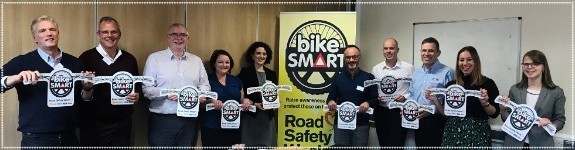
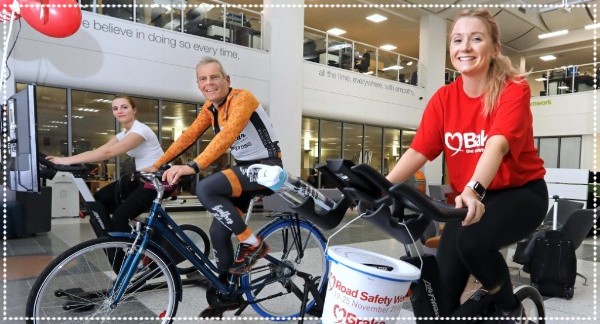
A huge thank you to all of you who took part in Road Safety Week last week. This year’s theme was Bike Smart with the aim of shouting about the safety of those on two wheels and encouraging everyone to be Bike Smart. It was fantastic to see so many organisations getting involved from teams dressing up as superheroes for our dress down day, companies fundraising with delicious treats at bake sales and organisations raising awareness by hosting events and displaying our banners.

To celebrate the end of Road Safety Week and everyone’s incredible efforts raising awareness on the safety of those on two wheels, we’d like to offer a FREE place on our Brake Pledge training workshops to anyone who fills out our Road Safety Week feedback survey here. *limited places on each workshop.

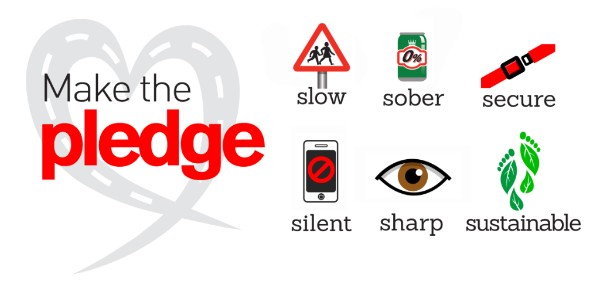
The Brake Pledge is a flexible driver training resource for companies that want to engage their drivers. It’s based on six key areas of road safety, addressing the specific issues that face at-work drivers as a high-risk group on our roads. Brake runs full day Pledge training courses for fleet managers, driver trainers, and anyone else with responsibility for managing at-work drivers. The workshops are facilitated by Tracey Fuller at Arval BNP, who provides an interactive and thought provoking session. All attendees will receive access to Brake's toolkit of Pledge resources, which includes advice for managers on delivering and implementing different areas of the Pledge, and also educational tools such as videos and posters that can be used with drivers.

UK training course dates and locations you can book onto:
  • 6 December -   Swindon
  • 11 December - Manchester
Simply complete the 5 minute survey and tick the box at the end to say you’re happy for us to contact you. We will then get in touch and book you onto one of the two available training courses left this year!

Don’t forget to keep sharing your photos and tweet us @BrakeProf, tag us on LinkedIn @Brake, the road safety charity or email photos across to us at professional@brake.org.uk.

Press Release: Automotive supplier industry, cities and campaigners call on EU industry ministers to back new vehicle safety standards without delay

26 November 2018
 
Brussels – A coalition of automotive supplier companies, cities and groups campaigning for greater road safety (1) are calling on EU Ministers of Industry to give their full support to a proposed package of new vehicle safety measures at the EU Competitiveness Council meeting on Thursday 29 November. At the meeting in Brussels, industry ministers will outline their initial response, known as a “general approach”, to a package of 16 vehicle safety measures proposed by the European Commission in May.


The coalition, representing €600 billion of annual sales and 5 million jobs in the automotive industry across the EU, together with city authorities, traffic police, safety and sustainability advocates, cyclists, pedestrians and victims groups, says the European Union should adopt the measures without delay and guarantee the safety benefits of the full package without deprioritising certain measures or further delaying the implementation of the draft regulation.


Sigrid de Vries, Secretary General of CLEPA, representing automotive suppliers said:


“The General Safety Regulation represents the next big step for the safety of Europe’s drivers, cyclists, and pedestrians. CLEPA strongly supports all the elements of the proposed text.


Besides reducing the number of deaths and serious injuries on our roads, the introduction of new safety measures will decrease road congestion, CO₂ emissions, emergency service requirements and related economic costs.  New safety requirements will also push forward European research, development and innovation, contributing to generate growth, jobs and investment in the European Union.”


Antonio Avenoso, Executive Director of ETSC, the European Transport Safety Council said:


“With progress stagnating on reducing the 25,000 deaths and 135,000 serious injuries every year on EU roads, it is essential that these measures are adopted in full, and without delay.  This is a historic opportunity to reduce death and serious injury on our roads – especially amongst vulnerable road users such as cyclists and pedestrians.  It is also a fantastic example of EU leadership that has a clear and obvious value to every European citizen.  Industry ministers should welcome these measures with open arms.”


Following the agreement among industry ministers, the legislation is subject to committee and plenary votes in the European Parliament and final negotiations between the institutions in a process that is likely to last several months.


(1) This press release is sent on behalf of the following organisations:

ANEC – The European consumer voice in standardisation

European Association of Automotive Suppliers (CLEPA)
European Transport Safety Council (ETSC)


European Cyclists Federation (ECF)

FEVR – European Federation of Road Traffic Victims

International Federation of Pedestrians (IFP)

POLIS – Cities and Regions for Better Transport
TISPOL – the European Traffic Police Network

26 Νοε 2018

ΔΕΛΤΙΟ ΤΥΠΟΥ: 3η Κυριακή του Νοέμβρη Παγκόσμια Ημέρα Μνήμης. Τιμήσαμε την 25η επέτειο της Παγκόσμιας Ημέρας Μνήμης


Η ΕΥΘΥΤΑ, όπως πάντα από το 2006  τίμησε και φέτος τη ημέρα αυτή διοργανώνοντας μια πολύ ουσιαστική και πολύ όμορφη εκδήλωση κατά κοινή ομολογία των παρευρισκομένων στον κατάμεστο προμαχώνα του Αγίου Γεωργίου στην παλιά πόλη της Ρόδου.

 «Τραγουδήσαμε για τη ζωή» Η Παγκόσμια Ημέρα Μνήμης καθιερώθηκε ως απάντηση στην βαθιά ανάγκη για δημόσια αναγνώριση της απώλειας και του πόνου που βιώνουν τα θύματα των τροχαίων.  Η Παγκόσμια Ημέρα Μνήμης, υπάρχει επίσης για  να δημιουργήσει  μια   παγκόσμια κουλτούρα οδικής κυκλοφορίας.
Η Παγκόσμια Ημέρα Μνήμης, παρέχει μία πρώτης τάξεως ευκαιρία -προβληματισμού για όλους μας, για αυτούς που χάθηκαν ή επηρεάστηκαν ανεπανόρθωτα από τραυματισμούς σε τροχαία, καθώς και για την προώθηση του ανθρώπινου παράγοντα στην οδική ασφάλεια. Τιμώντας τη μνήμη τους, θεμελιώνουμε το δικαίωμα να απαιτούμε υπευθυνότητα από όλους τους χρήστες των δρόμων και από τις κυβερνήσεις. Απαιτούμε,  εκτός από τα προγράμματα πρόληψης όπου υποστηρίζονται και τις πρωτοβουλίες  όπου υλοποιούνται- μία σοβαρή αντίδραση μετά το τροχαίο συμβάν στην ιατρική φροντίδα και στην απόδοση δικαιοσύνης.
Κανένας θάνατος και σοβαρός τραυματισμός στο δρόμο δεν είναι αποδεκτός . Τα τροχαία δεν είναι ατυχήματα-μπορούμε να τα μειώσουμε, αλλάζοντας οδηγική συμπεριφορά τηρώντας τους κανόνες οδικής κυκλοφορίας..μπορούμε να τα εκμηδενίσουμε αν καταλάβουμε ότι η ανθρώπινη ζωή είναι ανεκτίμητη και ξεχωριστή για τον καθένα χρήστη του οδικού δικτύου..  Χώρες που θέλησαν το κατάφεραν – εμείς γιατί;
Για τη ζωή, αξίζει να  σχεδιάσουμε εμείς εδώ,  βάζοντας στόχο VISION ZERO, αρκεί να υπάρξει πολιτική βούληση και επανασχεδιασμός  της οδικής ασφάλειας.
Εμείς τραγουδήσαμε  για τη Ζωή, υμνήσαμε  τη ζωή, με  το παγκόσμιο μήνυμα μεταφρασμένο σε όλες τις γλώσσες του κόσμου.
Ο δρόμος έχει τη δική του ιστορία. «Για χαρούμενο τέλος, ας βελτιώσουμε όλοι μας την οδική ασφάλεια», ας βελτιώσουμε  την παιδεία οδικής ασφάλειας για να χαιρόμαστε τη ζωή- οδηγώντας υπεύθυνα. Έτσι θα δημιουργήσουμε  πολιτισμό, διαλέγοντας τι επιλέγουμε να θυμόμαστε ή να ξεχάσουμε. Αυτό σημαίνει ότι δημιουργούμε πολιτισμό για να γίνουν οι δρόμοι ασφαλείς για όλους μας,. να πετύχουμε την μείωση των απωλειών στους δρόμους   για τα επόμενα χρόνια. Γι’ αυτό και η οδική ασφάλεια, μπαίνει πλέον στις παραμέτρους της λεγόμενης «αειφορίας» με στόχο τη μείωση των τροχαίων κατά 50% μέχρι το 2020
Η ΕΥΘΥΤΑ ευχαριστεί όλους εσάς  που ήσασταν κοντά μας και όλους  εσάς που συμβάλλατε  στην εκδήλωση μας για την Παγκόσμια Ημέρα Μνήμης 2018…ας μη ξεχνάμε ότι η ΕΥΘΥΤΑ είναι ένα κομμάτι της Ροδιακής κοινωνίας.


Ευχαριστούμε, το Δημοτικό Οργανισμό Πολιτισμού και Αθλητισμού Δήμου Ρόδου, τον Πρόεδρο της Εθνικής Λυρικής Σκηνής κ. Αθανάσιο Θεοδωρόπουλο,
 τους κορυφαίους μουσικούς του PHAROS WIND ENSEMBLE  της Ορχήστρας της Εθνικής Λυρικής Σκηνής, την Πειραματική χορωδία του Δήμου Ρόδου, το κ Λεωνίδα Σακελλαρίδη, 
την κ Μαρία Μιχαηλίδου Προϊσταμένη Εφορείας Αρχαιοτήτων Δωδεκανήσου, το κ Γιώργο Ποντικάκη, το κ. Κώστα Στυλιανού, το κ Φωτεινό Αττιτή-ΤΡΟΠΑΙΟΝ, τη γραφίστρια κ. Δέσποινα Τσουρούτη, το φωτογράφο κ. Γιάννη Μαρκαντώνη, το κ Παναγιώτη Κατσιδώνη-video, το ανθοπωλείο κ. Βάσως Θέμελη,  το Συνεταιρισμό Ιδιοκτητών ΤΑΧΙ Ρόδου, τις Δημιουργίες Χαράς, τη ΣΥΦΑΚ-Ρόδου, τα Μ.Μ.Ε και social media και  όλους τους εθελοντές φοιτητές του Πανεπιστημίου Αιγαίου η ελπίδα και η χαρά της ΕΥΘΥΤΑ


Δημοσίευση 
https://www.rodiaki.gr/article/403500/h-ekdhlwsh-ths-eythyta-gia-thn-pagkosmia-hmera-mnhmhs-thymatwn-troxaiwn-atyxhmatwn?